For small businesses, time adds up quickly. Something as simple as sending invoices, checks, statements, or customer mail can slowly eat away at the workday when the mailing process isn’t efficient. That’s one of the reasons postage meters continue to make sense for many businesses, even as more operations move online.
The days of postage meters being reserved for massive corporate mailrooms are long gone. Modern mailing systems are smaller, easier to use, and built for businesses that simply want a faster way to handle outgoing mail without constantly dealing with stamps, post office runs, or manual postage calculations.
If your business sends mail regularly, the right postage meter can save time, reduce mistakes, and make day-to-day operations run smoother.
What Small Businesses Actually Need From a Postage Meter
One mistake businesses make when shopping for mailing equipment is assuming they need the biggest or most advanced machine available. In reality, most small businesses are looking for reliability and simplicity more than anything else.
A good postage meter should make mailing easier, not more complicated.
For most small offices, the priorities usually come down to:
- simple operation
- affordable monthly costs
- accurate postage
- shipping integration
- dependable support
The best postage meter for a small business is usually the one that quietly handles the workload without creating extra steps for employees.
Why Postage Meters Still Matter in 2026
Even with digital communication everywhere, physical mail still plays a major role across industries like healthcare, legal, accounting, education, insurance, and real estate.
Businesses continue sending:
- invoices
- checks
- contracts
- compliance documents
- marketing mail
- customer correspondence
And when mail volume starts becoming consistent, manually handling postage becomes inefficient pretty quickly.
A postage meter removes a lot of that friction. Instead of estimating postage or keeping rolls of stamps in the office, businesses can print exact postage directly onto envelopes or labels in seconds.
That may sound minor, but over time it creates a much smoother workflow.
The Shift Toward Smarter Mailing Systems
Modern postage machines have changed quite a bit over the last several years. Many systems now combine mailing and shipping tools into one platform, allowing businesses to manage outgoing mail and packages from the same interface.
That matters because most businesses no longer deal strictly with envelopes. Shipping has become part of daily operations too.
Some newer systems now allow businesses to:
- compare shipping carrier rates
- print labels in-house
- track outgoing packages
- update postage automatically
- manage mailing activity remotely
For growing businesses, having those tools connected in one place makes operations much easier to manage.
Choosing the Right Postage Meter for Your Business
The right mailing system depends heavily on how often your business sends mail and what kind of workflow you’re trying to support.
A small office sending a few pieces of mail each day has very different needs than a business processing invoices or customer mail in larger batches.
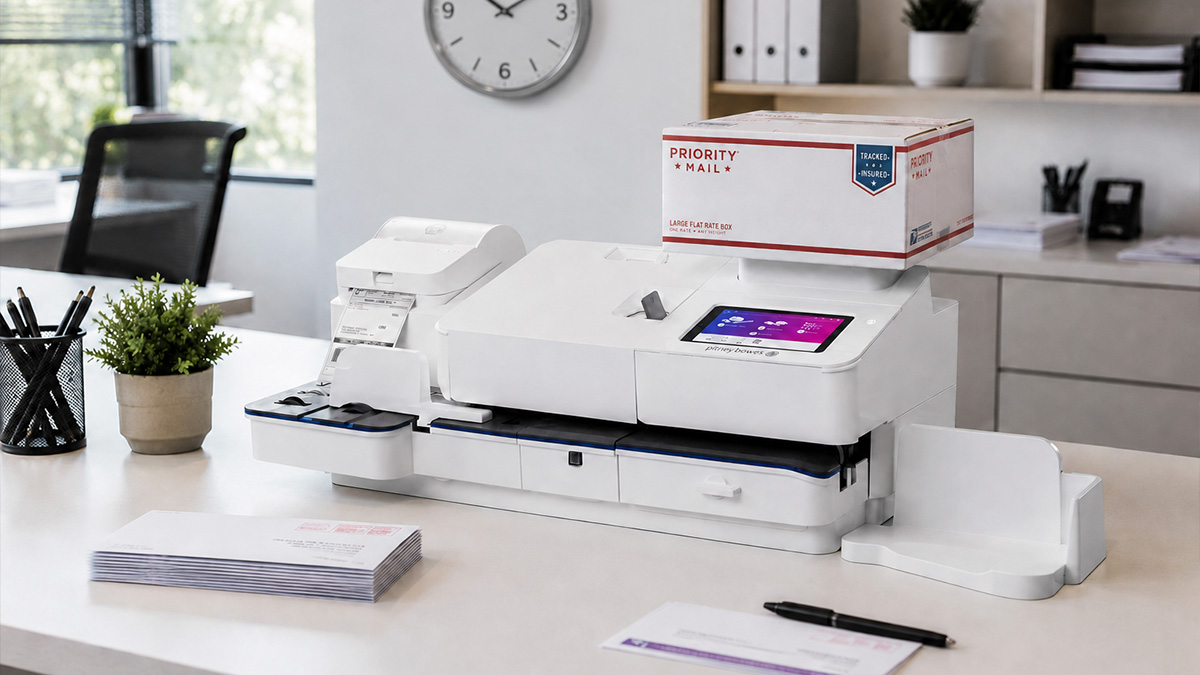
For lower-volume offices, compact systems are usually the best fit. They take up less space, are easier to learn, and handle everyday mailing needs without unnecessary complexity.
Businesses with heavier mailing activity may benefit from larger mailing machines that process envelopes faster and include built-in weighing, automatic feeders, or integrated shipping tools.
The important thing is choosing equipment that matches how your business actually operates rather than paying for features that rarely get used.
Cost Matters — But So Does Efficiency
A lot of businesses focus entirely on the monthly cost of a postage meter, which is understandable. But the cheapest option isn’t always the best long-term solution.
If employees are constantly troubleshooting mailing issues, making extra post office trips, or manually processing shipments, those inefficiencies create costs too.
The right postage system should reduce daily friction, not just lower postage expenses.
That’s why many businesses now look beyond basic postage printing and pay closer attention to workflow efficiency as a whole.
Cloud-Based Mailing Is Becoming the Standard
One of the biggest changes in the mailing industry has been the move toward cloud-connected systems.
Older postage meters were often tied closely to physical hardware and manual updates. Newer systems are far more flexible and easier to manage. USPS rate updates can happen automatically, shipping tools integrate more smoothly, and businesses can often manage mailing activity remotely.
This has made postage systems much more practical for smaller businesses that don’t have dedicated mailroom staff.
In many cases, the learning curve is far smaller than business owners expect.
Common Mistakes Small Businesses Make
A lot of businesses end up overcomplicating the buying process when searching for a postage meter for small business use.
Some purchase systems that are far too advanced for their actual workload. Others focus only on the upfront price without considering long-term support or usability.
A few things businesses should pay attention to include:
- how much mail is actually being sent monthly
- whether shipping tools are needed
- ease of use for employees
- equipment support and service
- room for future growth
The best mailing setup is usually the one employees can use comfortably every day without needing constant troubleshooting or support.
Are Postage Meters Worth It for Small Businesses?
For businesses that send mail regularly, the answer is very often yes.
The time savings alone can make a noticeable difference over the course of a month, especially for offices handling invoices, customer correspondence, or recurring mailings.
Modern business postage meters also make operations feel more organized. Instead of piecing together shipping platforms, stamps, labels, and mailing supplies separately, businesses can manage everything from a more centralized system.
That simplicity becomes more valuable as businesses grow.
The best postage meter for a small business depends less on finding the “most powerful” machine and more on finding a system that fits the way the business actually works.
For some businesses, that may mean a compact mailing solution that handles everyday outgoing mail efficiently. For others, it may involve a more advanced shipping and mailing platform that supports larger workflows and package management.
Universal Business Solutions works with businesses to help simplify mailing operations by matching companies with practical postage and shipping solutions based on their actual needs, workflow, and growth plans. If you would like to see how UBS can help streamline your business shipping needs, contact us. We’ll help you find the best solutions that align most with your business needs.